






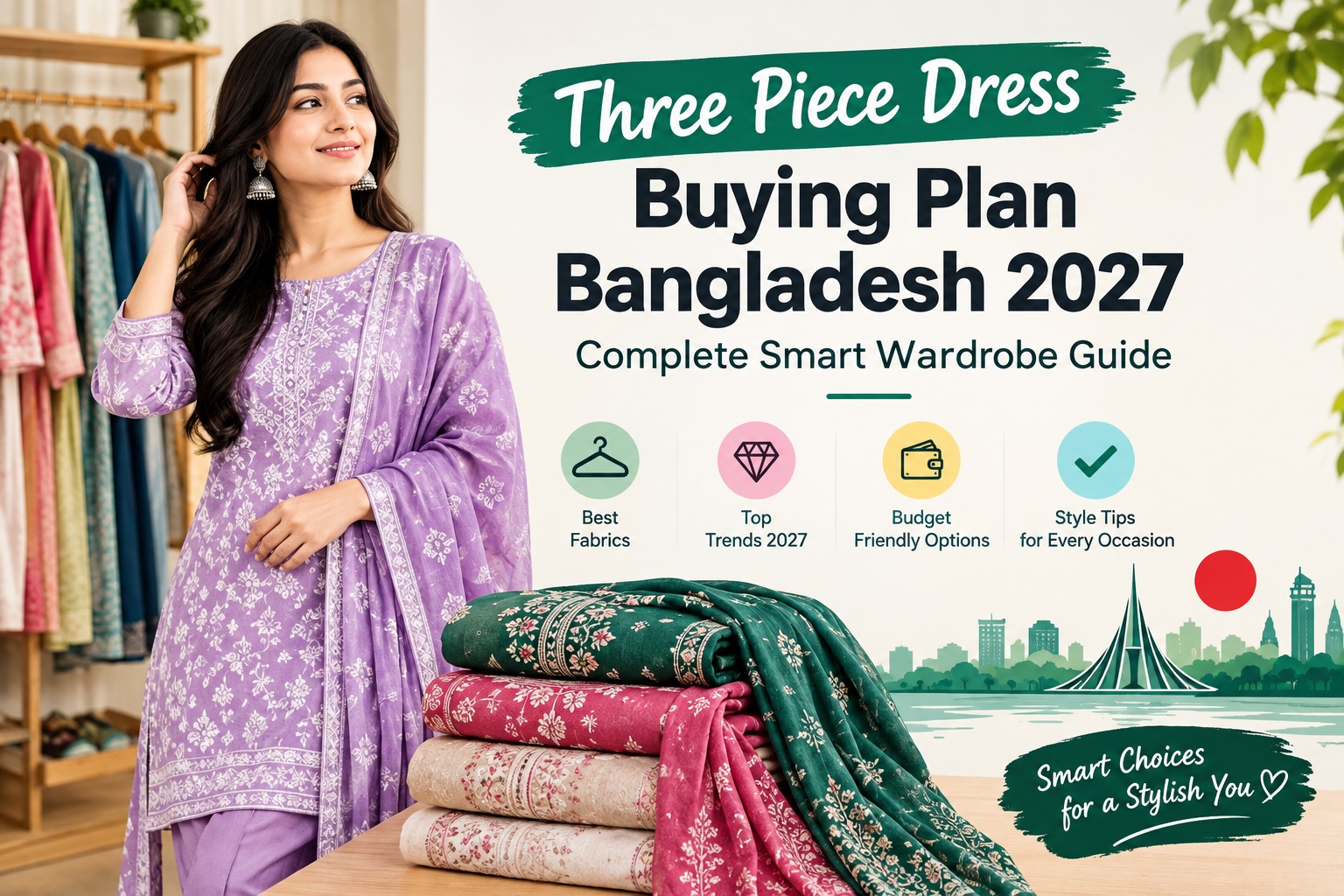
Three Piece Dress Buying Plan Bangladesh 2027: Complete Smart Wardrobe Guide focuses on one practical part of buying and maintaining three piece dresses online. A smart 2027 buying plan should focus less on accumulating sets and more on filling real wardrobe roles with fabrics, colours and pieces that can work together.
What this quality check tells you
Build a yearly plan around climate, work, study, family events, festivals and replacement needs rather than buying reactively before every occasion. Check what can be verified before payment and what can only be confirmed after delivery. Clear measurements, close-up photos and construction details reduce uncertainty, while vague quality claims do not.
Read the product description
Before shopping, list what you already own by fabric, colour, condition and purpose so new purchases solve gaps instead of duplicating them. Use a garment you already trust as a reference. Familiar construction and measurements make it easier to judge whether the new product is likely to fit your routine rather than just look attractive online.
Photo evidence
Keep simple wardrobe photos on your phone; seeing existing colours together makes it easier to judge whether a new item adds useful variety. Consider durability together with comfort. A well-made detail should survive repeated movement, washing and storage without creating extra work every time the outfit is worn.
Measurements
Maintain one current reference kameez and trouser measurement set so online sizing decisions stay consistent across sellers. If information is missing, ask a specific question before ordering. A clear answer is more useful than assuming the product will match the best possible interpretation of the listing.
Fabric connection
Plan warm-weather fabrics first because Bangladesh has long hot and humid periods, then add only the heavier or delicate pieces your actual events require. Keep the exchange window in mind until the garment has been inspected in natural light and tested for basic fit. Do not alter or wash a questionable item before deciding whether it should be kept.
Construction detail
Prioritize seam quality, fabric stability and comfortable fit before spending extra on decoration. Think about total value rather than the listed price alone. Tailoring, special cleaning and new supporting pieces can change the true cost of an apparently inexpensive outfit.
Kameez inspection
Aim for a mix of roles: dependable everyday kameez, professional options, travel-friendly pieces and a smaller number of occasion designs. Check what can be verified before payment and what can only be confirmed after delivery. Clear measurements, close-up photos and construction details reduce uncertainty, while vague quality claims do not.
Trouser inspection
Build reusable neutral trousers in comfortable cuts so every new kameez does not require a completely separate bottom. Use a garment you already trust as a reference. Familiar construction and measurements make it easier to judge whether the new product is likely to fit your routine rather than just look attractive online.
Dupatta inspection
Use dupattas strategically to change formality and colour; a few versatile layers can create more variety than many fixed complete sets. Consider durability together with comfort. A well-made detail should survive repeated movement, washing and storage without creating extra work every time the outfit is worn.
Colour and finish
Choose a core palette that connects existing shoes, bags and trousers, then add accent colours when they fill a real gap. If information is missing, ask a specific question before ordering. A clear answer is more useful than assuming the product will match the best possible interpretation of the listing.
Natural-light check
Check new colours in natural light before keeping them so they integrate with the wardrobe you already own. Keep the exchange window in mind until the garment has been inspected in natural light and tested for basic fit. Do not alter or wash a questionable item before deciding whether it should be kept.
Close-up check
Inspect quality details at delivery and exchange weak construction rather than accepting repair work on a brand-new garment. Think about total value rather than the listed price alone. Tailoring, special cleaning and new supporting pieces can change the true cost of an apparently inexpensive outfit.
Video check
For online purchases, movement videos should become part of your standard evidence request when fabric drape or sheen matters. Check what can be verified before payment and what can only be confirmed after delivery. Clear measurements, close-up photos and construction details reduce uncertainty, while vague quality claims do not.
Seller questions
Create a short seller-question template covering fabric, measurements, opacity, care and exchange so you do not forget important details. Use a garment you already trust as a reference. Familiar construction and measurements make it easier to judge whether the new product is likely to fit your routine rather than just look attractive online.
Review clues
Use reviews as supporting evidence, especially for shrinkage and sizing, but compare them with your own measurements and priorities. Consider durability together with comfort. A well-made detail should survive repeated movement, washing and storage without creating extra work every time the outfit is worn.
Exchange considerations
Prefer sellers with clear exchange terms when testing a new size system, fabric or brand for the first time. If information is missing, ask a specific question before ordering. A clear answer is more useful than assuming the product will match the best possible interpretation of the listing.
Total cost
Set separate budgets for everyday replacements, workwear and occasionwear so one event does not consume the entire clothing budget. Keep the exchange window in mind until the garment has been inspected in natural light and tested for basic fit. Do not alter or wash a questionable item before deciding whether it should be kept.
Delivery inspection
Inspect every purchase before removing tags and confirm that it fills the role written in your plan. Think about total value rather than the listed price alone. Tailoring, special cleaning and new supporting pieces can change the true cost of an apparently inexpensive outfit.
Movement test
Run a movement and seated-comfort test before keeping ready-made clothing. Check what can be verified before payment and what can only be confirmed after delivery. Clear measurements, close-up photos and construction details reduce uncertainty, while vague quality claims do not.
First-wash lesson
Use the first wash as quality feedback and record which fabrics or sellers perform reliably. Use a garment you already trust as a reference. Familiar construction and measurements make it easier to judge whether the new product is likely to fit your routine rather than just look attractive online.
Long-term care
Schedule simple wardrobe maintenance: repair loose seams, clean stored occasionwear and check humid-season storage before buying replacements. Consider durability together with comfort. A well-made detail should survive repeated movement, washing and storage without creating extra work every time the outfit is worn.
Repeat-wear value
Review cost per wear quarterly so future purchases are informed by what you actually used rather than what you expected to use. If information is missing, ask a specific question before ordering. A clear answer is more useful than assuming the product will match the best possible interpretation of the listing.
Common mistakes
Avoid buying several near-identical sets during sales, purchasing eventwear without a repeat plan or treating every trend as a wardrobe gap. Keep the exchange window in mind until the garment has been inspected in natural light and tested for basic fit. Do not alter or wash a questionable item before deciding whether it should be kept.
Final checklist
For every 2027 purchase ask: What role does it fill? What existing pieces match it? Can I maintain it? Are measurements clear? Can I name at least three realistic wears? Think about total value rather than the listed price alone. Tailoring, special cleaning and new supporting pieces can change the true cost of an apparently inexpensive outfit.
Frequently asked questions
What should I check first?
Start with a wardrobe audit and replacement needs before looking at new trends.
When should I request more evidence?
Ask whenever fabric, measurements, opacity, care or exchange information is unclear.
What should make me stop and reconsider?
Pause when the item duplicates a role you already cover well and has no clear repeat-wear advantage.
Final thoughts
A strong 2027 three piece wardrobe grows through deliberate replacement and versatile additions. Buy fewer isolated looks and more pieces that connect, perform and earn repeat wear.
Explore related buying guides at Navya Style. External ecommerce reference: Trativaa.