






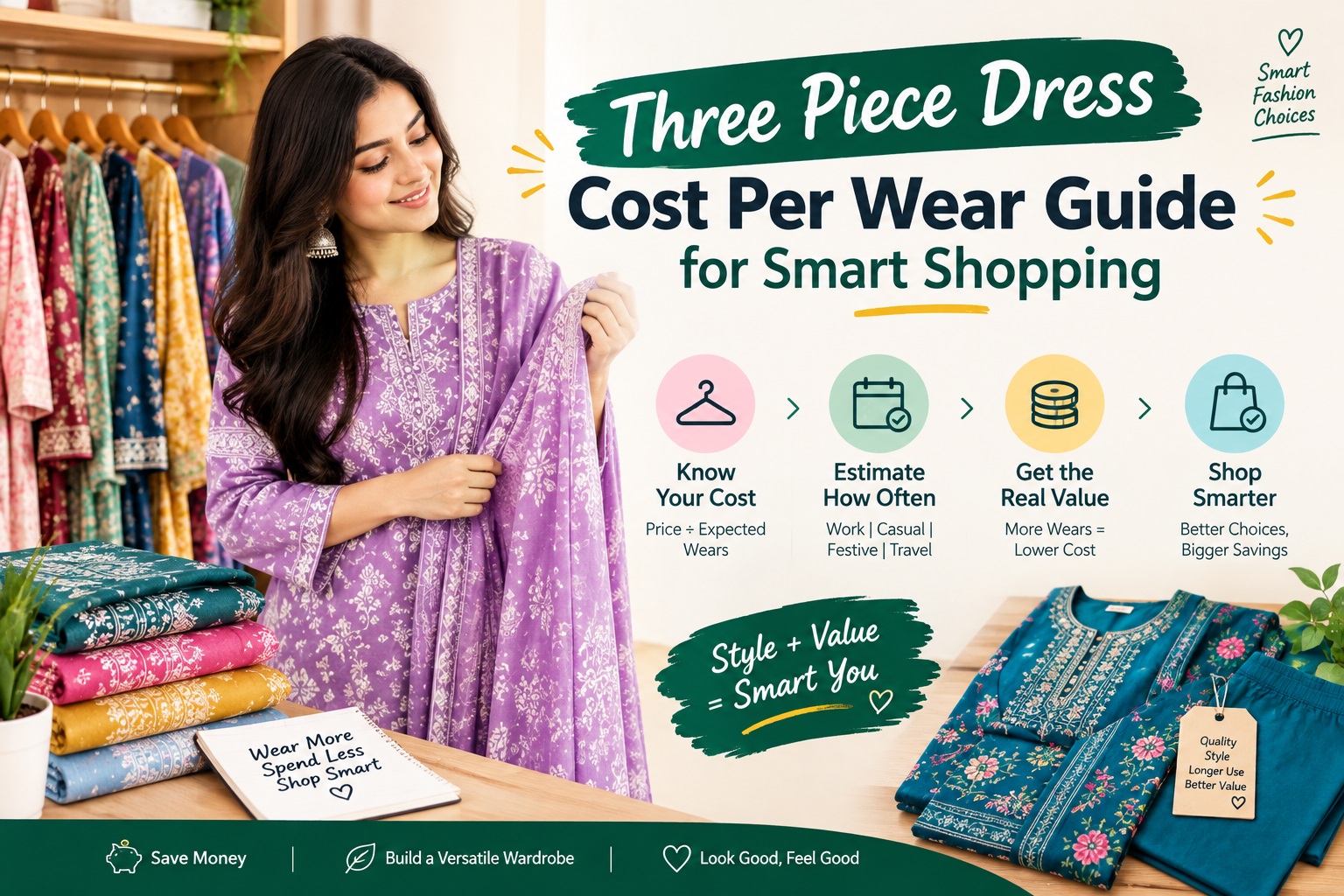
Three Piece Dress Cost Per Wear Guide for Smart Shopping focuses on one practical part of buying and maintaining three piece dresses online. Cost per wear helps compare purchases by realistic use rather than sale price, which is especially useful when one three piece needs tailoring, special care or additional accessories.
What this quality check tells you
Calculate the real cost of an outfit and compare it with how often you are likely to wear it. Think about total value rather than the listed price alone. Tailoring, special cleaning and new supporting pieces can change the true cost of an apparently inexpensive outfit.
Read the product description
List the base price and identify whether the set is complete or whether lining, stitching or separate pieces are still needed. Check what can be verified before payment and what can only be confirmed after delivery. Clear measurements, close-up photos and construction details reduce uncertainty, while vague quality claims do not.
Photo evidence
Use photos to judge versatility: a simple base may be easier to restyle than a highly specific event look. Use a garment you already trust as a reference. Familiar construction and measurements make it easier to judge whether the new product is likely to fit your routine rather than just look attractive online.
Measurements
Accurate measurements reduce alteration cost, so sizing information belongs directly in the value calculation. Consider durability together with comfort. A well-made detail should survive repeated movement, washing and storage without creating extra work every time the outfit is worn.
Fabric connection
Durable easy-care fabric can lower long-term cost even when the initial price is slightly higher. If information is missing, ask a specific question before ordering. A clear answer is more useful than assuming the product will match the best possible interpretation of the listing.
Construction detail
Strong seams, secure embroidery and reliable finishing reduce repair costs and extend usable life. Keep the exchange window in mind until the garment has been inspected in natural light and tested for basic fit. Do not alter or wash a questionable item before deciding whether it should be kept.
Kameez inspection
Ask how many different trousers or dupattas can work with the kameez after the original combination feels familiar. Think about total value rather than the listed price alone. Tailoring, special cleaning and new supporting pieces can change the true cost of an apparently inexpensive outfit.
Trouser inspection
A neutral well-fitting trouser may contribute value across several other outfits, not only the set it came with. Check what can be verified before payment and what can only be confirmed after delivery. Clear measurements, close-up photos and construction details reduce uncertainty, while vague quality claims do not.
Dupatta inspection
A versatile dupatta can refresh plain garments, giving it independent wardrobe value. Use a garment you already trust as a reference. Familiar construction and measurements make it easier to judge whether the new product is likely to fit your routine rather than just look attractive online.
Colour and finish
Colours already represented in your shoes, bags and wardrobe reduce the need for extra purchases. Consider durability together with comfort. A well-made detail should survive repeated movement, washing and storage without creating extra work every time the outfit is worn.
Natural-light check
View the garment realistically so you do not buy a colour or sheen that only appeals under studio lighting. If information is missing, ask a specific question before ordering. A clear answer is more useful than assuming the product will match the best possible interpretation of the listing.
Close-up check
Close-up quality evidence helps estimate whether the item will tolerate the number of wears you are assuming. Keep the exchange window in mind until the garment has been inspected in natural light and tested for basic fit. Do not alter or wash a questionable item before deciding whether it should be kept.
Video check
Movement video can reveal whether fabric and fit are comfortable enough for frequent use. Think about total value rather than the listed price alone. Tailoring, special cleaning and new supporting pieces can change the true cost of an apparently inexpensive outfit.
Seller questions
Ask about care, shrinkage and exchange before calculating value because unexpected maintenance changes the total cost. Check what can be verified before payment and what can only be confirmed after delivery. Clear measurements, close-up photos and construction details reduce uncertainty, while vague quality claims do not.
Review clues
Look for long-term reviews mentioning after-wash performance and repeat wear rather than first-impression excitement. Use a garment you already trust as a reference. Familiar construction and measurements make it easier to judge whether the new product is likely to fit your routine rather than just look attractive online.
Exchange considerations
A useful exchange policy reduces the risk of paying tailoring costs for a garment that is fundamentally the wrong size. Consider durability together with comfort. A well-made detail should survive repeated movement, washing and storage without creating extra work every time the outfit is worn.
Total cost
Add purchase price, delivery, tailoring, lining, special cleaning and any accessory you must buy specifically for the outfit. If information is missing, ask a specific question before ordering. A clear answer is more useful than assuming the product will match the best possible interpretation of the listing.
Delivery inspection
After arrival, confirm that the quality supports the number of wears used in your calculation before deciding to keep it. Keep the exchange window in mind until the garment has been inspected in natural light and tested for basic fit. Do not alter or wash a questionable item before deciding whether it should be kept.
Movement test
Comfort affects cost per wear because uncomfortable clothing is usually worn less often than planned. Think about total value rather than the listed price alone. Tailoring, special cleaning and new supporting pieces can change the true cost of an apparently inexpensive outfit.
First-wash lesson
Observe the first wash; shrinkage, fading or difficult ironing can reduce how frequently the piece returns to rotation. Check what can be verified before payment and what can only be confirmed after delivery. Clear measurements, close-up photos and construction details reduce uncertainty, while vague quality claims do not.
Long-term care
Include ongoing dry cleaning or special washing when comparing an event set with an easy-care everyday option. Use a garment you already trust as a reference. Familiar construction and measurements make it easier to judge whether the new product is likely to fit your routine rather than just look attractive online.
Repeat-wear value
Divide total realistic cost by expected wears, then revisit the estimate after a few months to see whether your prediction was accurate. Consider durability together with comfort. A well-made detail should survive repeated movement, washing and storage without creating extra work every time the outfit is worn.
Common mistakes
Do not inflate expected wears to justify a purchase and do not ignore hidden costs that are already obvious before checkout. If information is missing, ask a specific question before ordering. A clear answer is more useful than assuming the product will match the best possible interpretation of the listing.
Final checklist
Calculate total cost, realistic wears, care effort, cross-styling potential, durability and whether the outfit fills a genuine wardrobe gap. Keep the exchange window in mind until the garment has been inspected in natural light and tested for basic fit. Do not alter or wash a questionable item before deciding whether it should be kept.
Frequently asked questions
What should I check first?
Start with total real cost, not the discounted checkout price.
When should I request more evidence?
Ask for more information whenever uncertainty could change alteration, cleaning or expected-wear assumptions.
What should make me stop and reconsider?
Pause when you cannot name realistic situations in which the outfit will actually be worn.
Final thoughts
Cost per wear turns fashion budgeting into a practical use question. The best value is the garment you genuinely wear, maintain and restyle—not simply the cheapest one.
Explore related buying guides at Navya Style. External ecommerce reference: Trativaa.