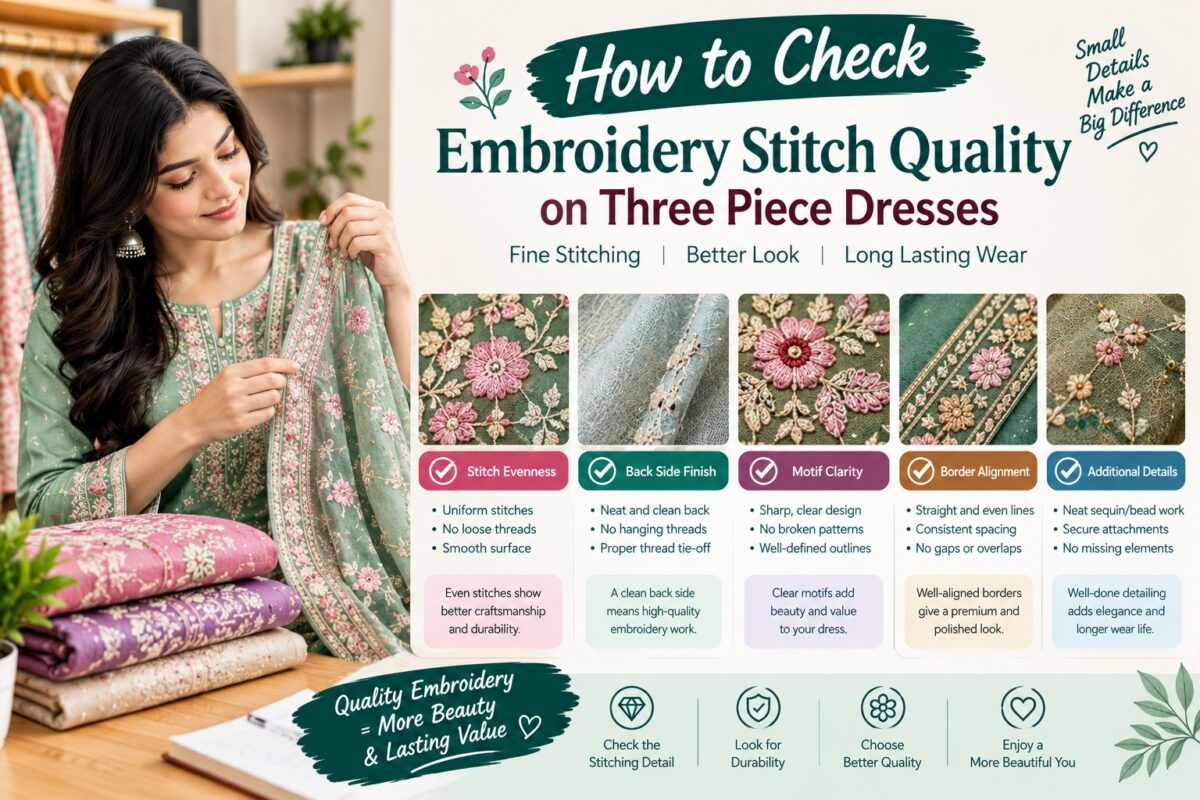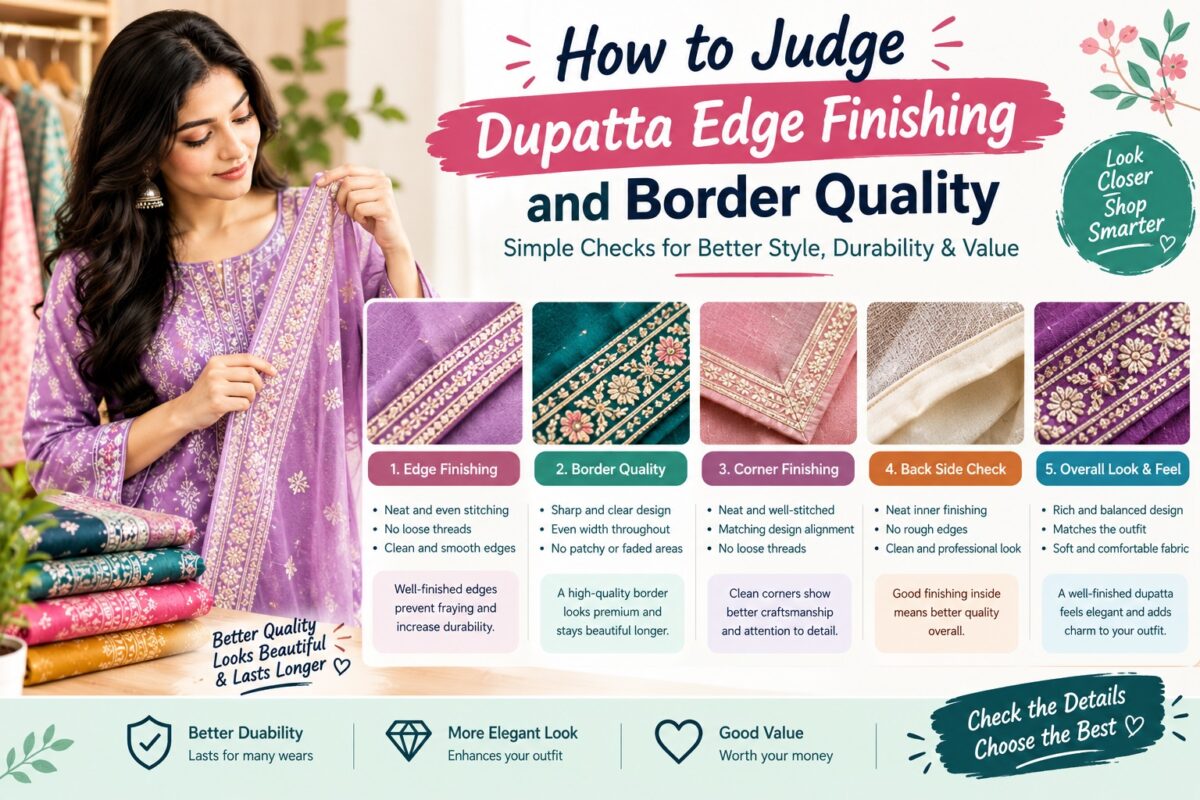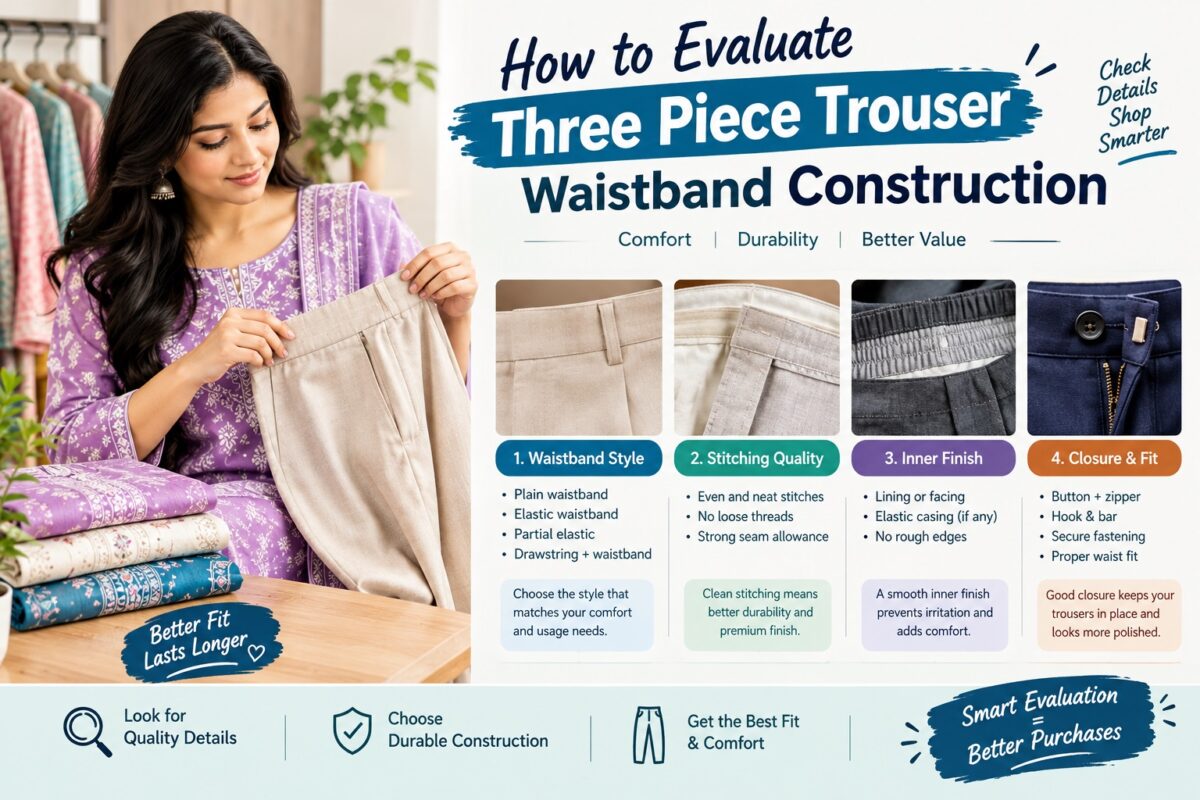


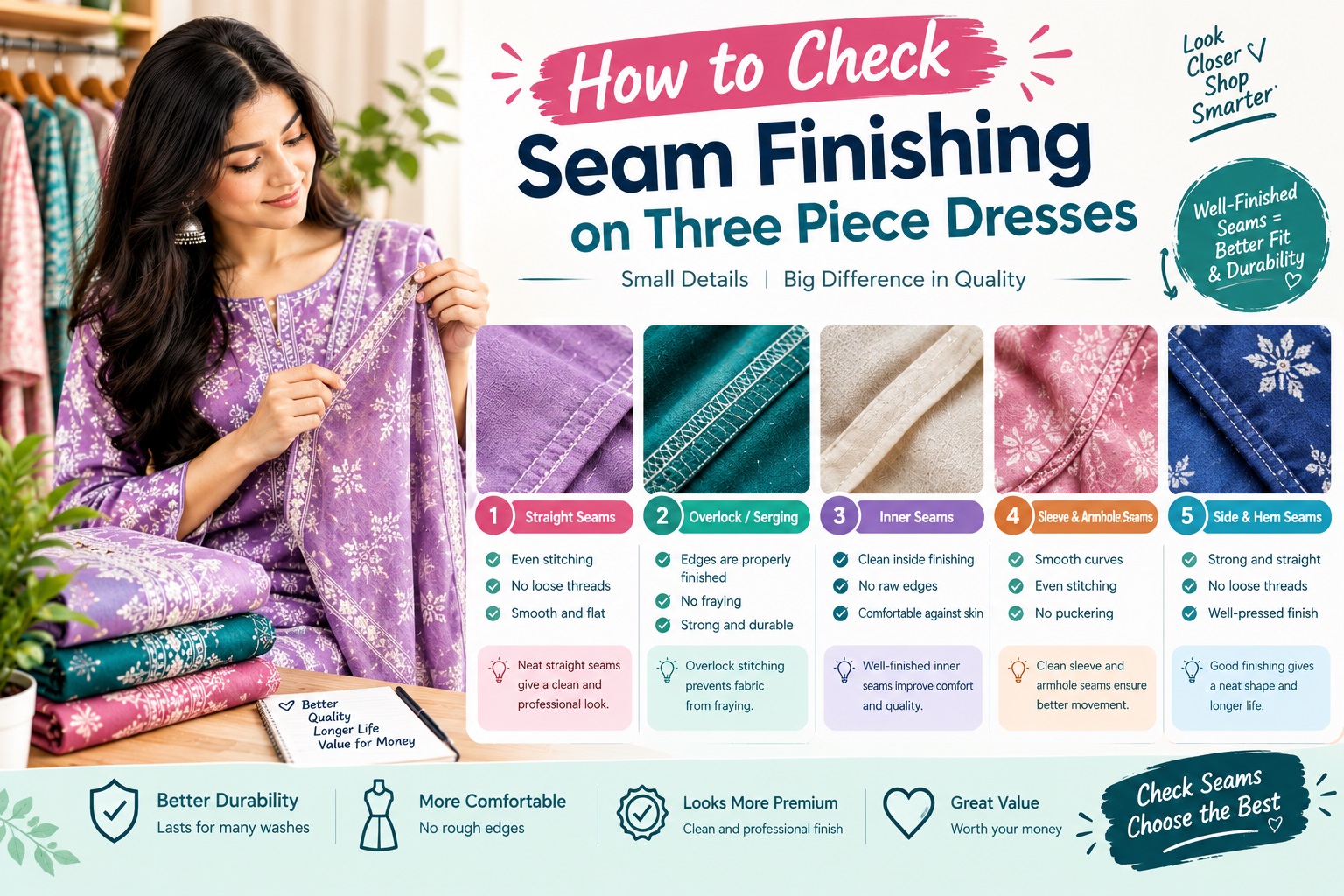
How to Check Seam Finishing on Three Piece Dresses focuses on one practical part of buying and maintaining three piece dresses online. Seams are hidden in many product photographs, but they determine whether a garment stays comfortable, keeps shape and survives repeated washing.
What this quality check tells you
Use inside finishing to judge whether the garment was assembled carefully rather than relying only on the visible front. Consider durability together with comfort. A well-made detail should survive repeated movement, washing and storage without creating extra work every time the outfit is worn.
Read the product description
Look for any mention of overlocking, lining or reinforced stitching, but treat photographs as the stronger evidence. If information is missing, ask a specific question before ordering. A clear answer is more useful than assuming the product will match the best possible interpretation of the listing.
Photo evidence
Ask for inside-out images of side seams, armholes and trouser seams when quality matters and the listing does not show them. Keep the exchange window in mind until the garment has been inspected in natural light and tested for basic fit. Do not alter or wash a questionable item before deciding whether it should be kept.
Measurements
Adequate seam allowance is useful for minor alterations; extremely narrow trimmed seams leave less room for adjustment. Think about total value rather than the listed price alone. Tailoring, special cleaning and new supporting pieces can change the true cost of an apparently inexpensive outfit.
Fabric connection
Fine lawn needs controlled tension, fraying linen blends need secure edges and sheer organza needs especially neat finishing. Check what can be verified before payment and what can only be confirmed after delivery. Clear measurements, close-up photos and construction details reduce uncertainty, while vague quality claims do not.
Construction detail
Stitches should be even, raw edges controlled and stress points reinforced without bulky thread nests. Use a garment you already trust as a reference. Familiar construction and measurements make it easier to judge whether the new product is likely to fit your routine rather than just look attractive online.
Kameez inspection
Inspect armholes, side slits, shoulder joins and hem because these areas combine movement with visible shape. Consider durability together with comfort. A well-made detail should survive repeated movement, washing and storage without creating extra work every time the outfit is worn.
Trouser inspection
Check crotch seams, inner legs and waistband joins; these areas carry more mechanical stress than decorative outer seams. If information is missing, ask a specific question before ordering. A clear answer is more useful than assuming the product will match the best possible interpretation of the listing.
Dupatta inspection
Dupattas may use rolled hems, narrow machine hems or borders; edges should lie flat without skipped stitches. Keep the exchange window in mind until the garment has been inspected in natural light and tested for basic fit. Do not alter or wash a questionable item before deciding whether it should be kept.
Colour and finish
Thread should usually coordinate with fabric unless contrast stitching is an intentional design element. Think about total value rather than the listed price alone. Tailoring, special cleaning and new supporting pieces can change the true cost of an apparently inexpensive outfit.
Natural-light check
Natural side light can reveal puckered seams and twisted grain more clearly than front-facing studio light. Check what can be verified before payment and what can only be confirmed after delivery. Clear measurements, close-up photos and construction details reduce uncertainty, while vague quality claims do not.
Close-up check
Zoom into slit corners, curved armholes and junctions where several seams meet because errors concentrate there. Use a garment you already trust as a reference. Familiar construction and measurements make it easier to judge whether the new product is likely to fit your routine rather than just look attractive online.
Video check
A movement video reveals whether side seams twist toward the front or back when the garment hangs naturally. Consider durability together with comfort. A well-made detail should survive repeated movement, washing and storage without creating extra work every time the outfit is worn.
Seller questions
Ask whether seams are overlocked or otherwise finished if the fabric frays easily and no inside photos are available. If information is missing, ask a specific question before ordering. A clear answer is more useful than assuming the product will match the best possible interpretation of the listing.
Review clues
Look for comments about seams opening, threads loosening or garments twisting after washing. Keep the exchange window in mind until the garment has been inspected in natural light and tested for basic fit. Do not alter or wash a questionable item before deciding whether it should be kept.
Exchange considerations
Document open seams or construction faults before wearing; repair should not automatically be your responsibility on a new item. Think about total value rather than the listed price alone. Tailoring, special cleaning and new supporting pieces can change the true cost of an apparently inexpensive outfit.
Total cost
A slightly higher price can be reasonable when construction is consistently strong because seam repair and alteration add hidden cost. Check what can be verified before payment and what can only be confirmed after delivery. Clear measurements, close-up photos and construction details reduce uncertainty, while vague quality claims do not.
Delivery inspection
Turn each piece inside out before removing tags and compare left and right sides for consistency. Use a garment you already trust as a reference. Familiar construction and measurements make it easier to judge whether the new product is likely to fit your routine rather than just look attractive online.
Movement test
Sit, reach and walk to check whether seams pull under normal movement or remain relaxed. Consider durability together with comfort. A well-made detail should survive repeated movement, washing and storage without creating extra work every time the outfit is worn.
First-wash lesson
After the first wash, inspect whether seam puckering increased or thread tension changed. If information is missing, ask a specific question before ordering. A clear answer is more useful than assuming the product will match the best possible interpretation of the listing.
Long-term care
Trim only clearly loose non-structural threads and repair small openings early before they grow. Keep the exchange window in mind until the garment has been inspected in natural light and tested for basic fit. Do not alter or wash a questionable item before deciding whether it should be kept.
Repeat-wear value
Strong seam finishing improves the life of simple garments even when they have very little decorative detail. Think about total value rather than the listed price alone. Tailoring, special cleaning and new supporting pieces can change the true cost of an apparently inexpensive outfit.
Common mistakes
Do not confuse visible overlock thread with poor quality automatically; the important issue is whether the edge is secure, even and suitable for the fabric. Check what can be verified before payment and what can only be confirmed after delivery. Clear measurements, close-up photos and construction details reduce uncertainty, while vague quality claims do not.
Final checklist
Check armholes, side seams, slit corners, crotch, hems, seam allowance, thread tension and twisting. Use a garment you already trust as a reference. Familiar construction and measurements make it easier to judge whether the new product is likely to fit your routine rather than just look attractive online.
Frequently asked questions
What should I check first?
Start with stress areas: armholes, side slits and trouser crotch seams.
When should I request more evidence?
Ask when the fabric frays easily or the listing shows no inside construction at all.
What should make me stop and reconsider?
Pause when seams are already opening, severely puckered or visibly twisted before wear.
Final thoughts
Seam finishing is one of the clearest indicators of practical garment quality. Strong inside construction often matters more than extra decoration.
Explore related buying guides at Navya Style. External ecommerce reference: Trativaa.