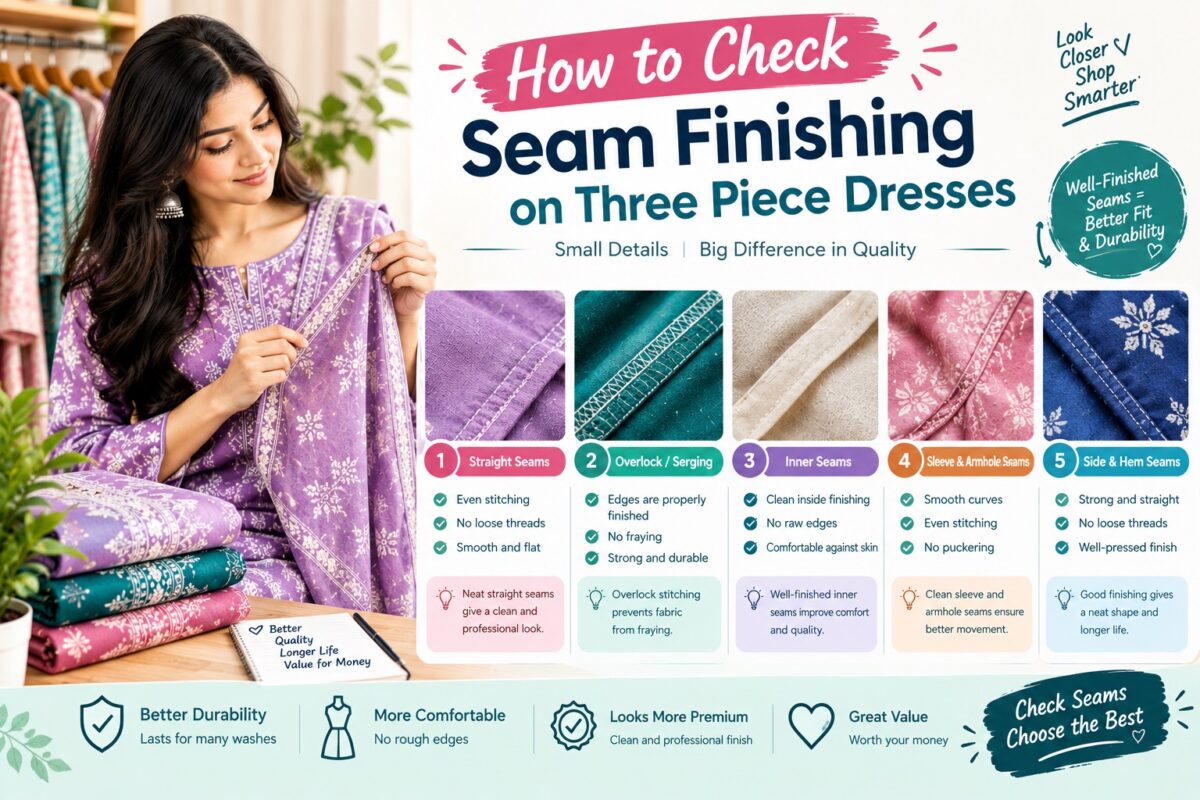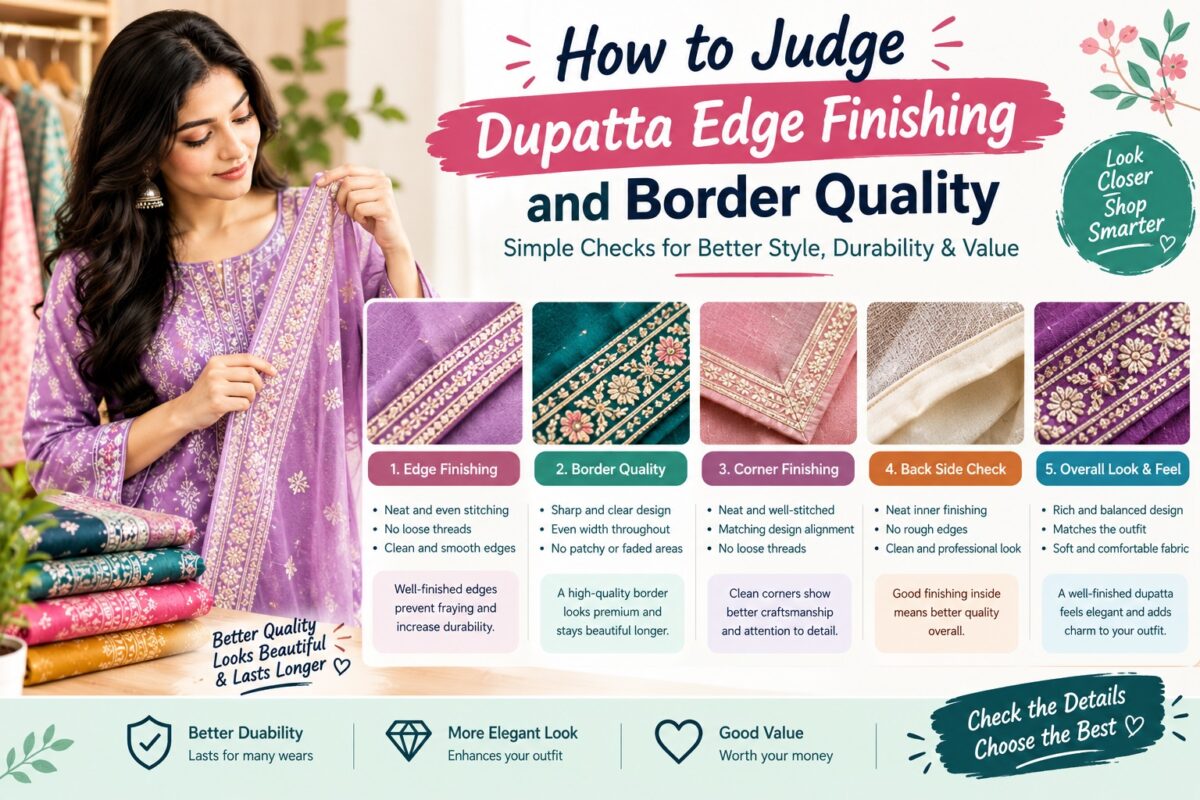


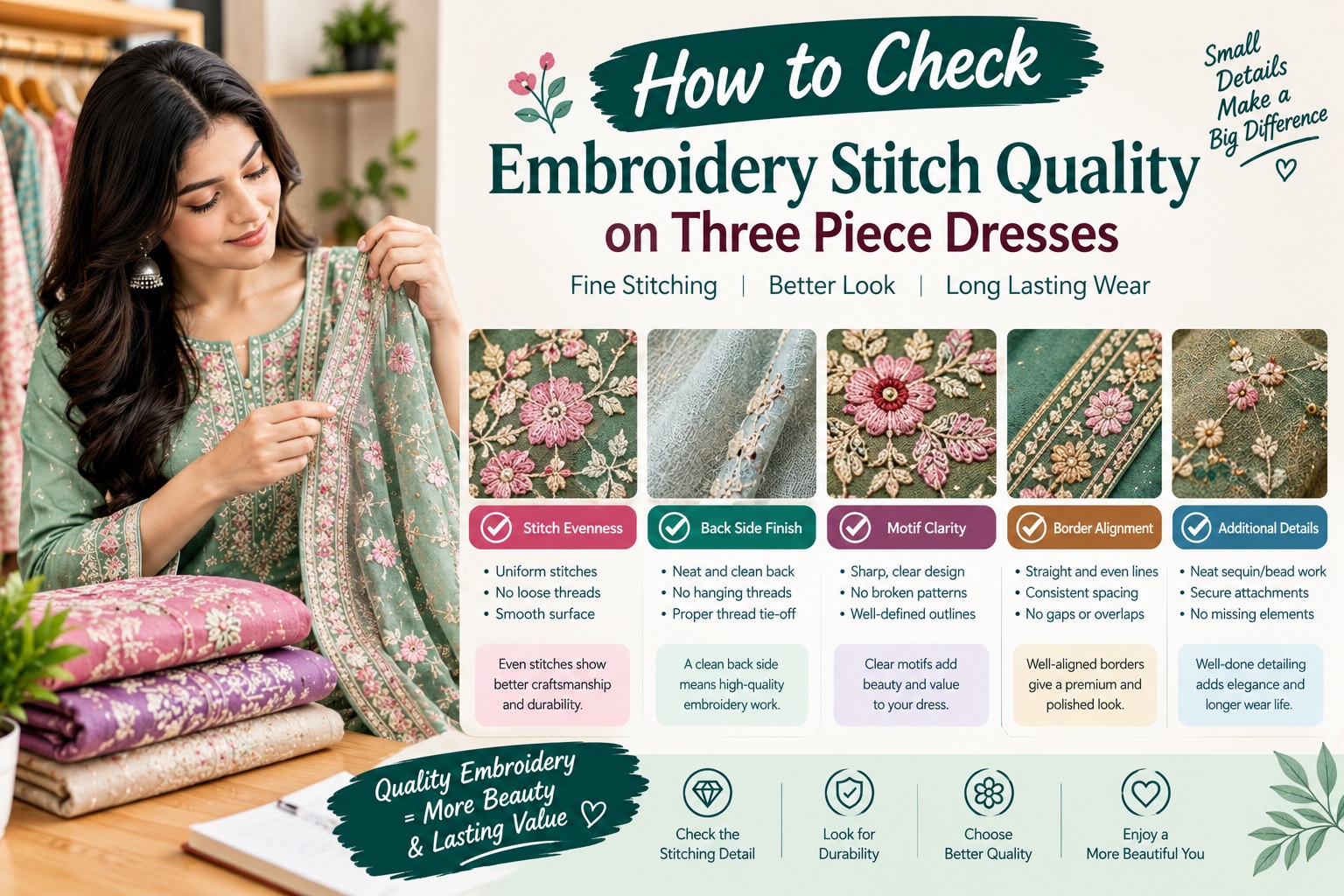
How to Check Embroidery Stitch Quality on Three Piece Dresses is designed to make online three piece shopping more evidence-based. Embroidery can add value or create maintenance problems depending on stitch tension, backing, thread security and how well the base fabric supports the work. The aim is to reduce guesswork before payment and catch quality or fit problems while an exchange is still possible.
The main question this guide solves
Inspect embroidery as construction rather than simply decoration so you can judge whether it will remain stable through wear and cleaning. Compare the detail with a garment you already own whenever possible. A familiar reference helps you understand scale, thickness and construction far better than a model photograph taken with unknown lighting, posing or editing.
Start with the product description
Identify whether the work is machine embroidery, hand work, appliqué or mixed embellishment because each has different signs of quality. A strong online listing should make the decision easier by reducing questions. When the seller shows only the most attractive angle and leaves out practical details, ask for clarification before payment instead of assuming the best-case version.
Use the photos as evidence
Ask for sharp close-ups of front and reverse sides; distant model photos cannot show loose loops, knots or puckering. Think beyond the first wear. Construction and fabric choices determine whether the garment remains comfortable and presentable after washing, sitting, commuting and repeated use. Quality is what continues to matter after the excitement of purchase is gone.
Check measurements
Embroidery placement can reduce alteration options, so check whether important motifs sit near side seams, cuffs or hem areas you may need to change. Keep screenshots or notes of important product information until the exchange period is finished. If the delivered garment differs from the measurements or description, you have a clear reference for discussing the issue with the seller.
Inspect fabric information
Fine lawn, organza and chiffon need lighter or better-supported stitching than sturdy cotton or jacquard. Price should be evaluated together with uncertainty. A cheaper listing with incomplete information can become more expensive if it needs alteration, replacement accessories or cannot be returned. Clear specifications have real value in online shopping.
Look at construction
Look for even thread tension, clean starts and stops, secure edges and base fabric that remains flat around the design. Use evidence that can be checked rather than promotional language. Measurements, close-up photographs, material details and care instructions are more useful than broad words such as premium or luxury. If important information is missing, treat that uncertainty as part of the product’s risk.
Check the trouser
If the trouser has embroidery near the hem or pocket, inspect whether the placement is symmetrical and practical for washing. Compare the detail with a garment you already own whenever possible. A familiar reference helps you understand scale, thickness and construction far better than a model photograph taken with unknown lighting, posing or editing.
Check the dupatta
Embroidery on a sheer dupatta should have tidy backing and edge finishing because both sides may remain visible while draped. A strong online listing should make the decision easier by reducing questions. When the seller shows only the most attractive angle and leaves out practical details, ask for clarification before payment instead of assuming the best-case version.
Colour accuracy
Contrast thread exposes mistakes more clearly; tonal thread needs close-up inspection because weak stitches can hide in matching colour. Think beyond the first wear. Construction and fabric choices determine whether the garment remains comfortable and presentable after washing, sitting, commuting and repeated use. Quality is what continues to matter after the excitement of purchase is gone.
Natural-light clues
Side lighting is useful because it reveals puckering and raised knots through shadow. Keep screenshots or notes of important product information until the exchange period is finished. If the delivered garment differs from the measurements or description, you have a clear reference for discussing the issue with the seller.
Close-up clues
Zoom into curves, corners and dense areas where machines or hand stitching are most likely to create uneven tension. Price should be evaluated together with uncertainty. A cheaper listing with incomplete information can become more expensive if it needs alteration, replacement accessories or cannot be returned. Clear specifications have real value in online shopping.
What video can reveal
A movement video can show whether heavy embroidery makes one panel unusually stiff or pulls the garment out of shape. Use evidence that can be checked rather than promotional language. Measurements, close-up photographs, material details and care instructions are more useful than broad words such as premium or luxury. If important information is missing, treat that uncertainty as part of the product’s risk.
Read reviews critically
Look for reports of threads loosening after washing, scratchy backing or embellishment catching on other fabric. Compare the detail with a garment you already own whenever possible. A familiar reference helps you understand scale, thickness and construction far better than a model photograph taken with unknown lighting, posing or editing.
Ask the seller useful questions
Ask whether the embroidery contains glued stones, sequins or other components that need different care from thread alone. A strong online listing should make the decision easier by reducing questions. When the seller shows only the most attractive angle and leaves out practical details, ask for clarification before payment instead of assuming the best-case version.
Know your exchange position
Check defect policy before ordering expensive embroidery; missing stitches or detached work should be documented before wear. Think beyond the first wear. Construction and fabric choices determine whether the garment remains comfortable and presentable after washing, sitting, commuting and repeated use. Quality is what continues to matter after the excitement of purchase is gone.
Compare total cost
More embroidery is not automatically better value. Clean, well-placed stitching often outperforms a larger quantity of weak work. Keep screenshots or notes of important product information until the exchange period is finished. If the delivered garment differs from the measurements or description, you have a clear reference for discussing the issue with the seller.
First inspection after delivery
Inspect embroidery before removing tags and gently check whether loose threads are decorative ends or signs of unraveling. Price should be evaluated together with uncertainty. A cheaper listing with incomplete information can become more expensive if it needs alteration, replacement accessories or cannot be returned. Clear specifications have real value in online shopping.
First-wear test
Make sure backing and knots do not scratch the skin or catch on jewellery, bags and dupatta fabric. Use evidence that can be checked rather than promotional language. Measurements, close-up photographs, material details and care instructions are more useful than broad words such as premium or luxury. If important information is missing, treat that uncertainty as part of the product’s risk.
First-wash test
Follow the most delicate component’s care guidance and protect embroidered surfaces from friction. Compare the detail with a garment you already own whenever possible. A familiar reference helps you understand scale, thickness and construction far better than a model photograph taken with unknown lighting, posing or editing.
Record what you learn
If one type of embroidery performs well, save close-up photos and care notes for future comparison. A strong online listing should make the decision easier by reducing questions. When the seller shows only the most attractive angle and leaves out practical details, ask for clarification before payment instead of assuming the best-case version.
Common mistakes
Do not judge embroidery only by density or shine, and do not cut loose threads until you understand whether they secure a stitch. Think beyond the first wear. Construction and fabric choices determine whether the garment remains comfortable and presentable after washing, sitting, commuting and repeated use. Quality is what continues to matter after the excitement of purchase is gone.
Quick decision checklist
Check front, back, tension, puckering, loose loops, embellishment attachment, placement and care requirements. Keep screenshots or notes of important product information until the exchange period is finished. If the delivered garment differs from the measurements or description, you have a clear reference for discussing the issue with the seller.
Frequently asked questions
What should I verify first?
Inspect stitch tension and the base fabric around dense motifs first.
When should I ask the seller for more information?
Ask whenever close-ups or reverse-side views are missing, especially on higher-priced embroidered sets.
What should make me pause before ordering?
Pause when the base fabric is visibly puckered, threads are already loose or heavy work has no visible support.
Final thoughts
Good embroidery adds texture without damaging the base fabric. Clean tension, secure finishing and appropriate weight matter more than the amount of decoration.
Explore related shopping guides at Navya Style. External ecommerce reference: Trativaa.