

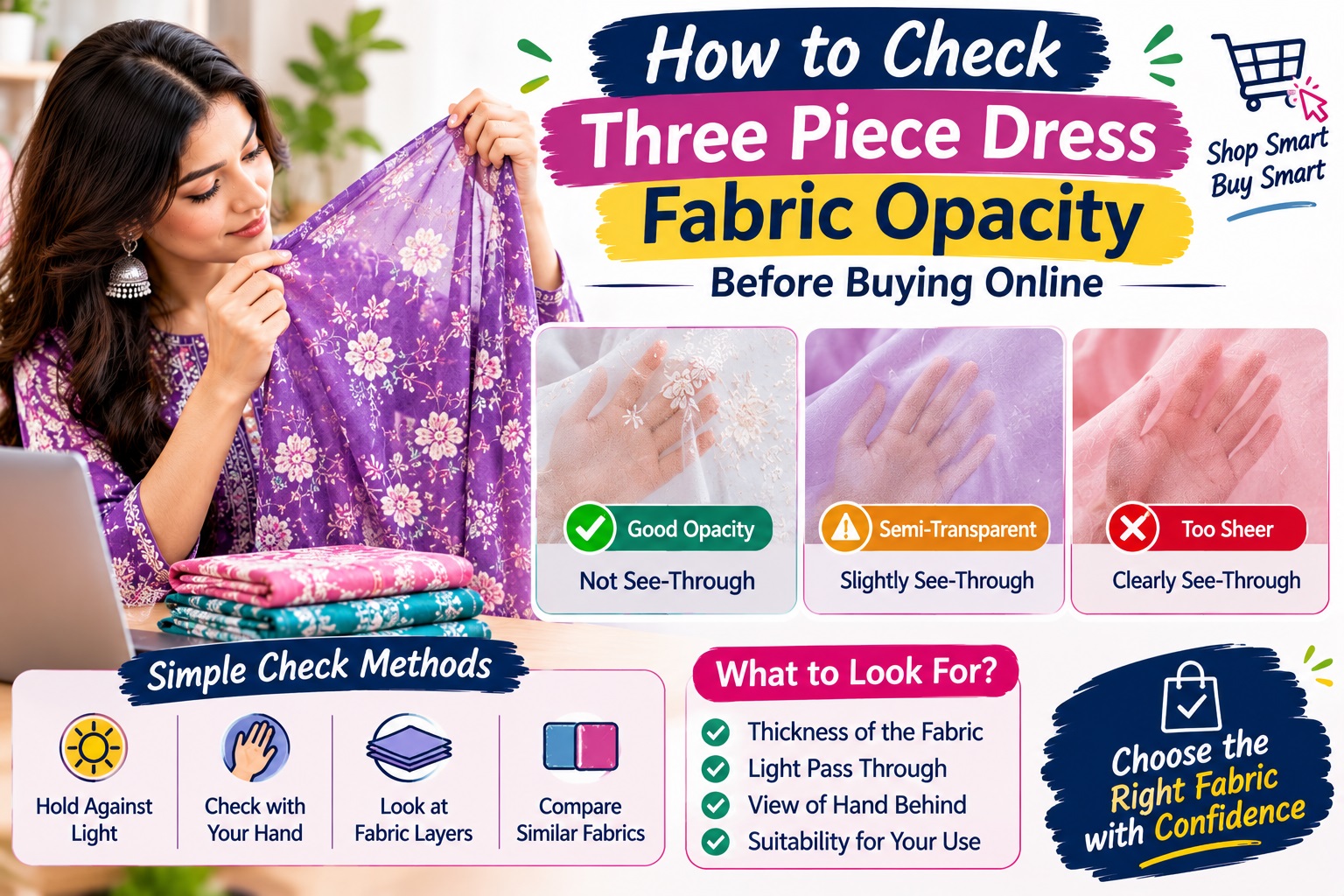
How to Check Three Piece Dress Fabric Opacity Before Buying Online is designed to make online three piece shopping more evidence-based. Opacity affects coverage, lining, heat and comfort, yet it is difficult to judge from edited photos unless you know what evidence to request. The aim is to reduce guesswork before payment and catch quality or fit problems while an exchange is still possible.
The main question this guide solves
Determine whether the kameez, trouser and dupatta have the level of transparency you expect before the product arrives. Price should be evaluated together with uncertainty. A cheaper listing with incomplete information can become more expensive if it needs alteration, replacement accessories or cannot be returned. Clear specifications have real value in online shopping.
Start with the product description
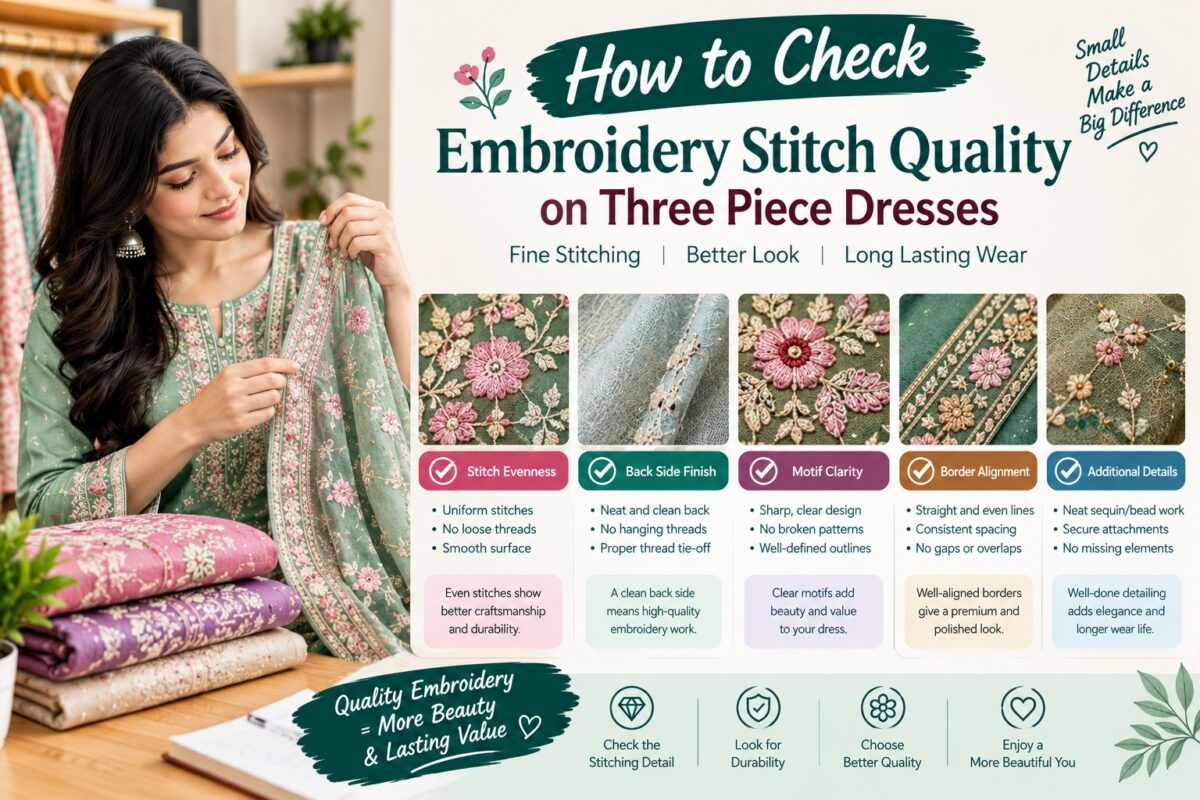
Look for fabric name and colour first; fine voile, pale lawn, chiffon and organza naturally raise different opacity questions than dense cambric. Use evidence that can be checked rather than promotional language. Measurements, close-up photographs, material details and care instructions are more useful than broad words such as premium or luxury. If important information is missing, treat that uncertainty as part of the product’s risk.
Use the photos as evidence
Ask for the fabric held against natural light and for a normal full-garment photo without extra styling layers hiding the issue. Compare the detail with a garment you already own whenever possible. A familiar reference helps you understand scale, thickness and construction far better than a model photograph taken with unknown lighting, posing or editing.
Check measurements
Fit influences opacity because fabric pulled tightly can become more transparent, so correct garment ease matters alongside material. A strong online listing should make the decision easier by reducing questions. When the seller shows only the most attractive angle and leaves out practical details, ask for clarification before payment instead of assuming the best-case version.
Inspect fabric information
Weave density, fibre, colour and finishing all affect coverage; the same fabric label can vary between sellers. Think beyond the first wear. Construction and fabric choices determine whether the garment remains comfortable and presentable after washing, sitting, commuting and repeated use. Quality is what continues to matter after the excitement of purchase is gone.
Look at construction
Seam allowances and pocket bags may show through pale fabric, revealing whether lining or a slip is likely to be useful. Keep screenshots or notes of important product information until the exchange period is finished. If the delivered garment differs from the measurements or description, you have a clear reference for discussing the issue with the seller.
Check the trouser
Trouser opacity deserves separate attention because sitting and movement can make thin pale material more revealing than a standing photo suggests. Price should be evaluated together with uncertainty. A cheaper listing with incomplete information can become more expensive if it needs alteration, replacement accessories or cannot be returned. Clear specifications have real value in online shopping.
Check the dupatta
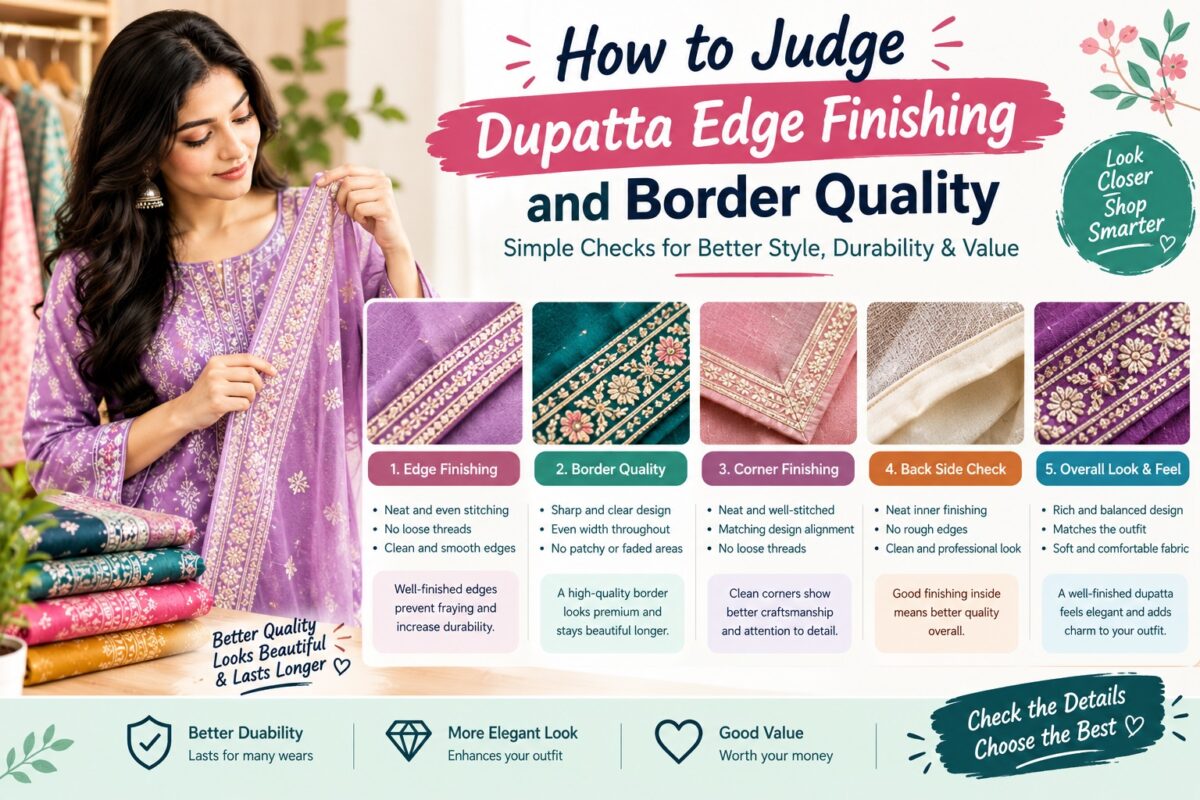
Transparency is often desirable in a dupatta, but check whether the border and print create the visual effect you expect. Use evidence that can be checked rather than promotional language. Measurements, close-up photographs, material details and care instructions are more useful than broad words such as premium or luxury. If important information is missing, treat that uncertainty as part of the product’s risk.
Colour accuracy
White, cream and pastel shades generally show underlying layers more readily than medium or deep colours in the same fabric. Compare the detail with a garment you already own whenever possible. A familiar reference helps you understand scale, thickness and construction far better than a model photograph taken with unknown lighting, posing or editing.
Natural-light clues
Natural window light from behind the fabric is the most useful simple test; direct flash can exaggerate or hide the result. A strong online listing should make the decision easier by reducing questions. When the seller shows only the most attractive angle and leaves out practical details, ask for clarification before payment instead of assuming the best-case version.
Close-up clues
A close-up of weave density helps explain why one lawn or voile is more opaque than another. Think beyond the first wear. Construction and fabric choices determine whether the garment remains comfortable and presentable after washing, sitting, commuting and repeated use. Quality is what continues to matter after the excitement of purchase is gone.
What video can reveal
Ask the seller to move the fabric in front of a light source; changing angle can reveal transparency better than one still image. Keep screenshots or notes of important product information until the exchange period is finished. If the delivered garment differs from the measurements or description, you have a clear reference for discussing the issue with the seller.
Read reviews critically
Buyer comments mentioning lining, slips or sheerness are especially useful for pale colourways. Price should be evaluated together with uncertainty. A cheaper listing with incomplete information can become more expensive if it needs alteration, replacement accessories or cannot be returned. Clear specifications have real value in online shopping.
Ask the seller useful questions
Ask directly whether the kameez or trouser needs lining for normal daylight wear rather than using vague wording such as is it good quality. Use evidence that can be checked rather than promotional language. Measurements, close-up photographs, material details and care instructions are more useful than broad words such as premium or luxury. If important information is missing, treat that uncertainty as part of the product’s risk.
Know your exchange position
If opacity is essential, confirm exchange eligibility before ordering because personal expectations vary. Compare the detail with a garment you already own whenever possible. A familiar reference helps you understand scale, thickness and construction far better than a model photograph taken with unknown lighting, posing or editing.
Compare total cost
Include the cost and heat of additional lining when comparing a very light set with a denser alternative. A strong online listing should make the decision easier by reducing questions. When the seller shows only the most attractive angle and leaves out practical details, ask for clarification before payment instead of assuming the best-case version.
First inspection after delivery
Check the garment in daylight before removing tags and compare it both relaxed and while worn with normal ease. Think beyond the first wear. Construction and fabric choices determine whether the garment remains comfortable and presentable after washing, sitting, commuting and repeated use. Quality is what continues to matter after the excitement of purchase is gone.
First-wear test
Test seated and standing positions because layers and fabric tension change slightly with movement. Keep screenshots or notes of important product information until the exchange period is finished. If the delivered garment differs from the measurements or description, you have a clear reference for discussing the issue with the seller.
First-wash test
Some cotton can become slightly more compact or softer after washing, but do not rely on washing to solve transparency. Price should be evaluated together with uncertainty. A cheaper listing with incomplete information can become more expensive if it needs alteration, replacement accessories or cannot be returned. Clear specifications have real value in online shopping.
Record what you learn
Note which fabric weights and colours meet your preferred coverage so future shopping becomes faster. Use evidence that can be checked rather than promotional language. Measurements, close-up photographs, material details and care instructions are more useful than broad words such as premium or luxury. If important information is missing, treat that uncertainty as part of the product’s risk.
Common mistakes
Do not assume dark studio backgrounds, model layers or the word cotton guarantee opacity. Compare the detail with a garment you already own whenever possible. A familiar reference helps you understand scale, thickness and construction far better than a model photograph taken with unknown lighting, posing or editing.
Quick decision checklist
Confirm fabric, colour, daylight test, trouser coverage, lining information and exchange options before paying. A strong online listing should make the decision easier by reducing questions. When the seller shows only the most attractive angle and leaves out practical details, ask for clarification before payment instead of assuming the best-case version.
Frequently asked questions
What should I verify first?
Check the trouser and the lightest kameez area in natural backlight first.
When should I ask the seller for more information?
Ask whenever pale or lightweight fabric is shown only against dark backgrounds or over an obvious inner layer.
What should make me pause before ordering?
Pause if coverage matters to you and the seller cannot provide a simple daylight test.
Final thoughts
Opacity is a practical fabric property, not a quality label. Ask for the right evidence and include lining in the comfort and cost decision.
Explore related shopping guides at Navya Style. External ecommerce reference: Trativaa.