

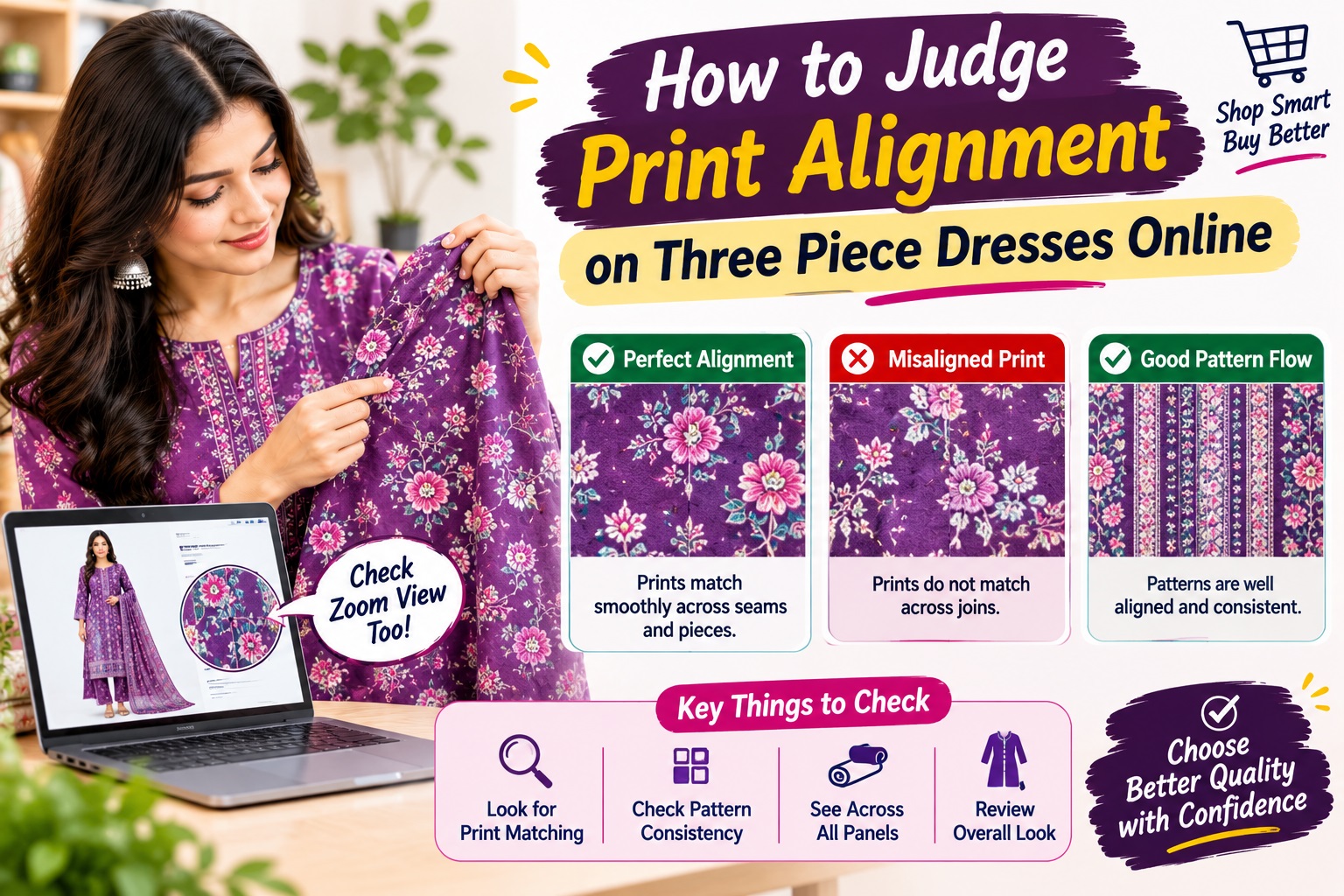
How to Judge Print Alignment on Three Piece Dresses Online is designed to make online three piece shopping more evidence-based. Straight stripes, borders, checks and large motifs make cutting accuracy visible, so print alignment is a useful quality check before buying a stitched three piece. The aim is to reduce guesswork before payment and catch quality or fit problems while an exchange is still possible.
The main question this guide solves
Identify where alignment matters most and distinguish deliberate print placement from obvious cutting or sewing mistakes. Use evidence that can be checked rather than promotional language. Measurements, close-up photographs, material details and care instructions are more useful than broad words such as premium or luxury. If important information is missing, treat that uncertainty as part of the product’s risk.
Start with the product description
Check whether the listing describes placement print, all-over print or border design because each creates different alignment expectations. Compare the detail with a garment you already own whenever possible. A familiar reference helps you understand scale, thickness and construction far better than a model photograph taken with unknown lighting, posing or editing.
Use the photos as evidence
Use full front, back and side images; close-up neckline photos alone cannot show whether major lines and motifs sit straight. A strong online listing should make the decision easier by reducing questions. When the seller shows only the most attractive angle and leaves out practical details, ask for clarification before payment instead of assuming the best-case version.
Check measurements
Correct size matters because stretching a too-small garment can distort an otherwise well-aligned print. Think beyond the first wear. Construction and fabric choices determine whether the garment remains comfortable and presentable after washing, sitting, commuting and repeated use. Quality is what continues to matter after the excitement of purchase is gone.
Inspect fabric information
Stable woven fabrics hold print geometry more predictably than very fluid cloth, which can shift during cutting and sewing. Keep screenshots or notes of important product information until the exchange period is finished. If the delivered garment differs from the measurements or description, you have a clear reference for discussing the issue with the seller.
Look at construction
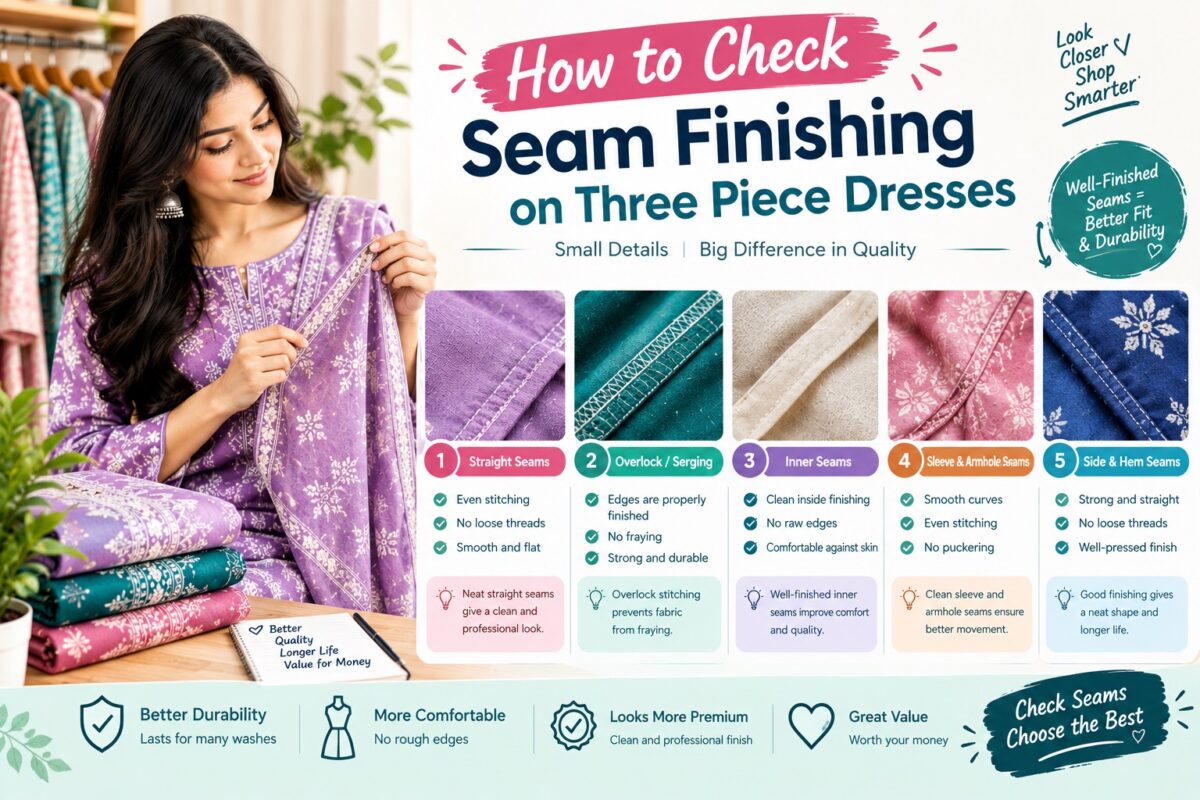
Inspect centre front, placket, shoulder, side seams and sleeve joins where straight lines or repeated motifs meet. Price should be evaluated together with uncertainty. A cheaper listing with incomplete information can become more expensive if it needs alteration, replacement accessories or cannot be returned. Clear specifications have real value in online shopping.
Check the trouser
If the trouser is striped or checked, confirm both legs are cut in the same direction and the pattern does not visibly twist. Use evidence that can be checked rather than promotional language. Measurements, close-up photographs, material details and care instructions are more useful than broad words such as premium or luxury. If important information is missing, treat that uncertainty as part of the product’s risk.
Check the dupatta
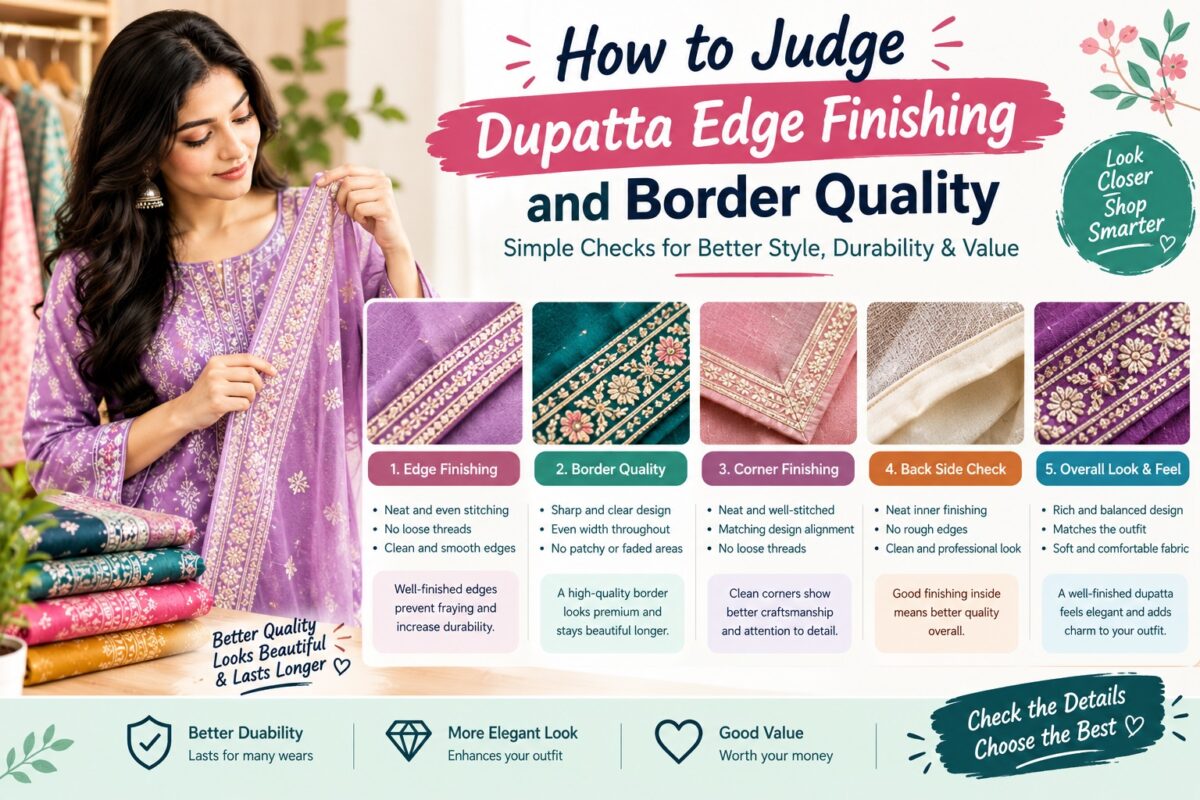
A printed dupatta does not need to match every motif on the kameez, but borders should be straight and corners finished consistently. Compare the detail with a garment you already own whenever possible. A familiar reference helps you understand scale, thickness and construction far better than a model photograph taken with unknown lighting, posing or editing.
Colour accuracy
High-contrast prints make misalignment easier to see, while tonal patterns may hide small cutting differences. A strong online listing should make the decision easier by reducing questions. When the seller shows only the most attractive angle and leaves out practical details, ask for clarification before payment instead of assuming the best-case version.
Natural-light clues
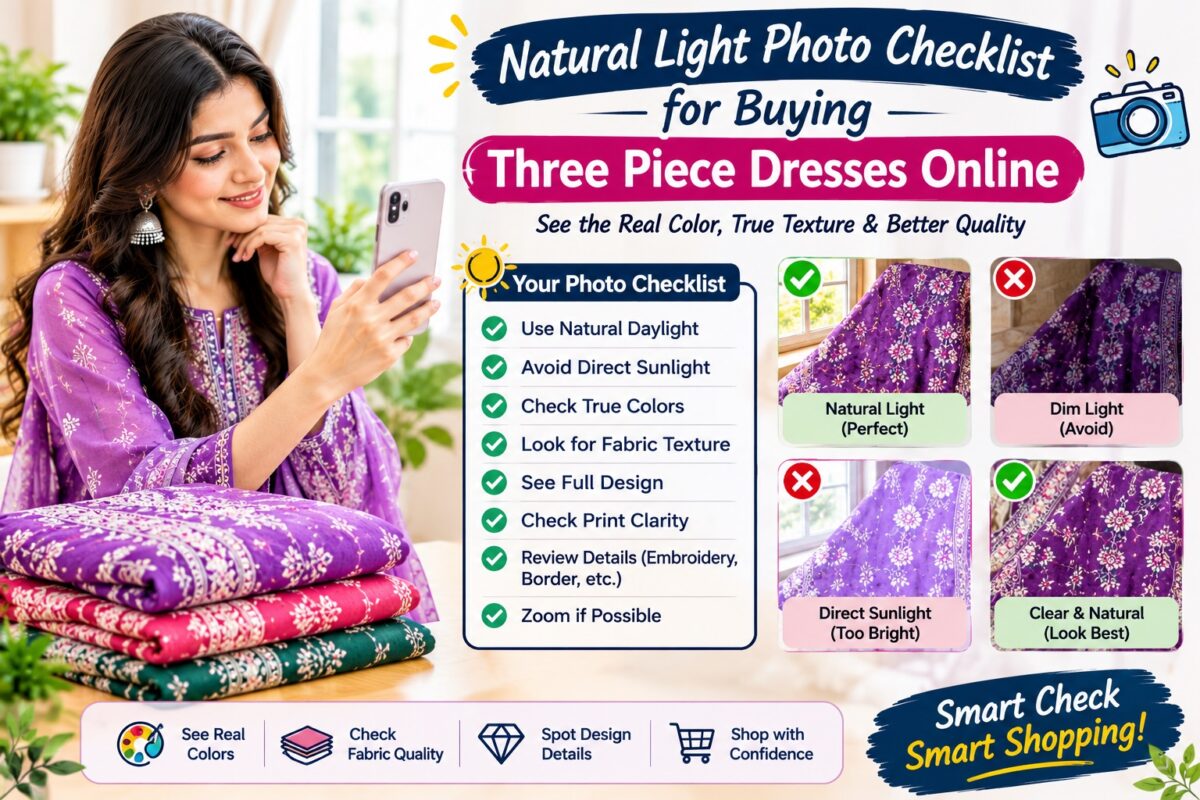
Natural light helps reveal whether a seam is actually crooked or only distorted by shadow in the studio image. Think beyond the first wear. Construction and fabric choices determine whether the garment remains comfortable and presentable after washing, sitting, commuting and repeated use. Quality is what continues to matter after the excitement of purchase is gone.
Close-up clues
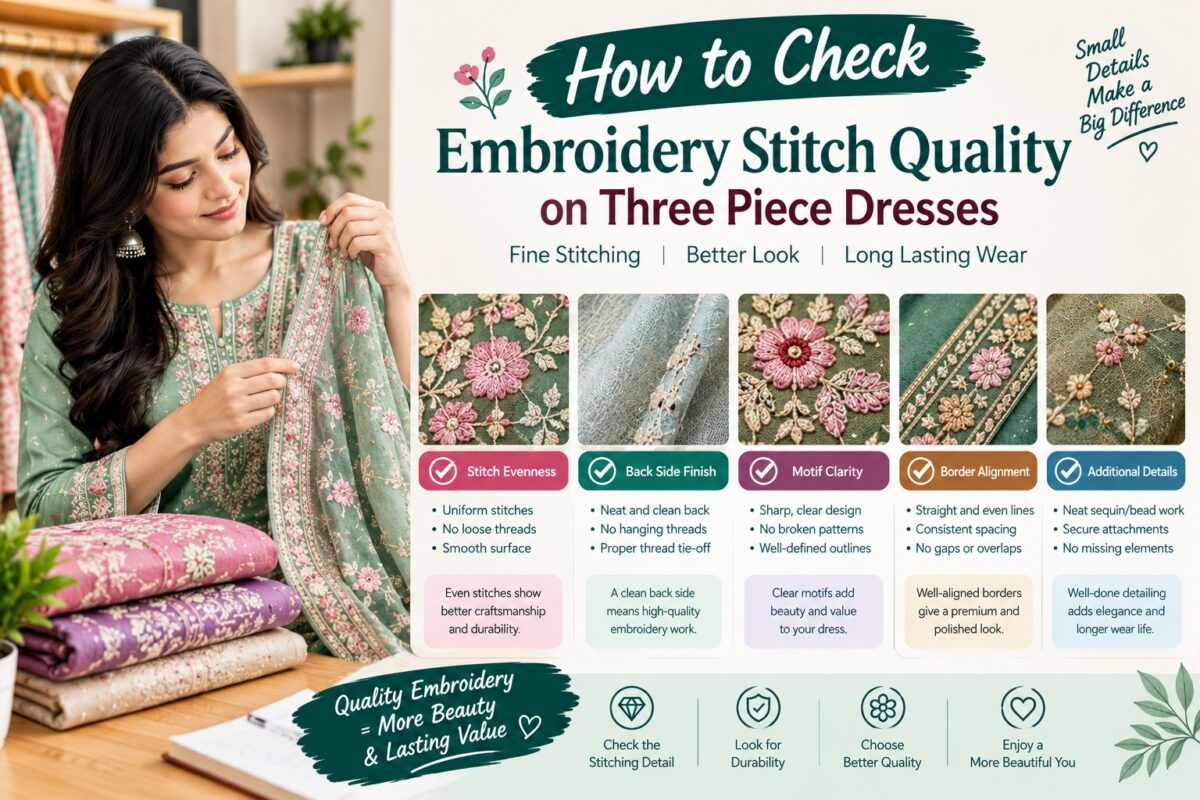
Zoom into border joins, plackets and panel seams; abrupt half-motifs can indicate careless placement on a design meant to be symmetrical. Keep screenshots or notes of important product information until the exchange period is finished. If the delivered garment differs from the measurements or description, you have a clear reference for discussing the issue with the seller.
What video can reveal
Movement video reveals whether vertical stripes stay straight when the garment hangs naturally or twist because of grain or seam problems. Price should be evaluated together with uncertainty. A cheaper listing with incomplete information can become more expensive if it needs alteration, replacement accessories or cannot be returned. Clear specifications have real value in online shopping.
Read reviews critically
Buyer photos can show whether alignment quality is consistent across multiple units rather than perfect only on the sample. Use evidence that can be checked rather than promotional language. Measurements, close-up photographs, material details and care instructions are more useful than broad words such as premium or luxury. If important information is missing, treat that uncertainty as part of the product’s risk.
Ask the seller useful questions
Ask whether placement varies between pieces when the fabric has a large repeat or hand-print process. Compare the detail with a garment you already own whenever possible. A familiar reference helps you understand scale, thickness and construction far better than a model photograph taken with unknown lighting, posing or editing.
Know your exchange position
Confirm whether obvious cutting or print-placement defects qualify for exchange before ordering a highly geometric design. A strong online listing should make the decision easier by reducing questions. When the seller shows only the most attractive angle and leaves out practical details, ask for clarification before payment instead of assuming the best-case version.
Compare total cost
More careful pattern matching can require extra fabric and labor, so a well-aligned complex print may reasonably cost more. Think beyond the first wear. Construction and fabric choices determine whether the garment remains comfortable and presentable after washing, sitting, commuting and repeated use. Quality is what continues to matter after the excitement of purchase is gone.
First inspection after delivery
Lay the garment flat before wearing and compare left and right sides, sleeve direction and major borders. Keep screenshots or notes of important product information until the exchange period is finished. If the delivered garment differs from the measurements or description, you have a clear reference for discussing the issue with the seller.
First-wear test
If lines distort only when worn, check fit before assuming the print was cut incorrectly. Price should be evaluated together with uncertainty. A cheaper listing with incomplete information can become more expensive if it needs alteration, replacement accessories or cannot be returned. Clear specifications have real value in online shopping.
First-wash test
Dry and reshape carefully because twisted seams after washing can make once-straight patterns look misaligned. Use evidence that can be checked rather than promotional language. Measurements, close-up photographs, material details and care instructions are more useful than broad words such as premium or luxury. If important information is missing, treat that uncertainty as part of the product’s risk.
Record what you learn
Photograph good pattern placement if you plan to order similar designs from the same seller again. Compare the detail with a garment you already own whenever possible. A familiar reference helps you understand scale, thickness and construction far better than a model photograph taken with unknown lighting, posing or editing.
Common mistakes
Do not demand impossible perfect matching from random small florals, but do not ignore visibly crooked stripes or borders that should be straight. A strong online listing should make the decision easier by reducing questions. When the seller shows only the most attractive angle and leaves out practical details, ask for clarification before payment instead of assuming the best-case version.
Quick decision checklist
Inspect centre lines, shoulders, sleeves, side seams, borders, trouser legs and whether the pattern follows fabric grain. Think beyond the first wear. Construction and fabric choices determine whether the garment remains comfortable and presentable after washing, sitting, commuting and repeated use. Quality is what continues to matter after the excitement of purchase is gone.
Frequently asked questions
What should I verify first?
Start with straight lines and large symmetrical motifs because errors are easiest to see there.
When should I ask the seller for more information?
Ask when the product uses placement prints, checks, stripes or large borders and only one front image is shown.
What should make me pause before ordering?
Pause when major lines are visibly crooked or the seller will not show the full garment.
Final thoughts
Print alignment is a construction clue. Judge the areas where matching is technically expected and allow natural variation where the design does not require symmetry.
Explore related shopping guides at Navya Style. External ecommerce reference: Trativaa.